Symbols and Payouts in Big Bass Bonanza: A Complete Guide
The legendary fishing series returns with the Big Bass Bonanza 1000 slot, cranking up winning opportunities to new heights with a record-breaking 25,000x max win.
US 18+
Play responsibly
Only operators licensed by DGOJ


Why break down the symbol set
The symbol set explains where wins come from and which events actually move the result. In Big Bass Bonanza the experience is built on how regular icons interact with special ones. Knowing the roles helps you read the screen logic instead of guessing from animations.
Exact values for payouts, multipliers and other parameters can differ by game version and operator. Below we focus on principles that stay stable even when the interface or paytable shifts.
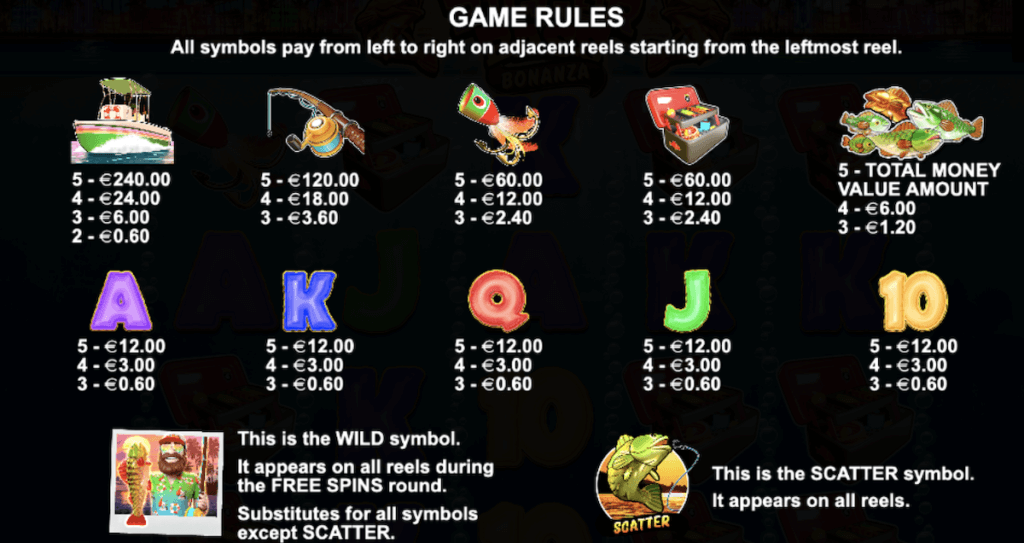
Base symbols: low and high pays
The game uses a familiar split into two groups. Low-pay symbols are card ranks that form lines often and create small wins to maintain the spin rhythm. They are noticeable but rarely decide a round.
High-pay symbols are fishing-themed items. Their combinations appear less frequently but contribute more. It helps to remember the internal ranking: the info panel in each version shows which high symbol pays more. Concrete coefficients vary by build, so rely on the in-game table.
Both groups pay on lines, evaluated left to right. The number of lines and their map are in the help section. Even if the artwork looks familiar, open “Info” to confirm line evaluation and ranking. That’s the key to hit frequency and base-win size.
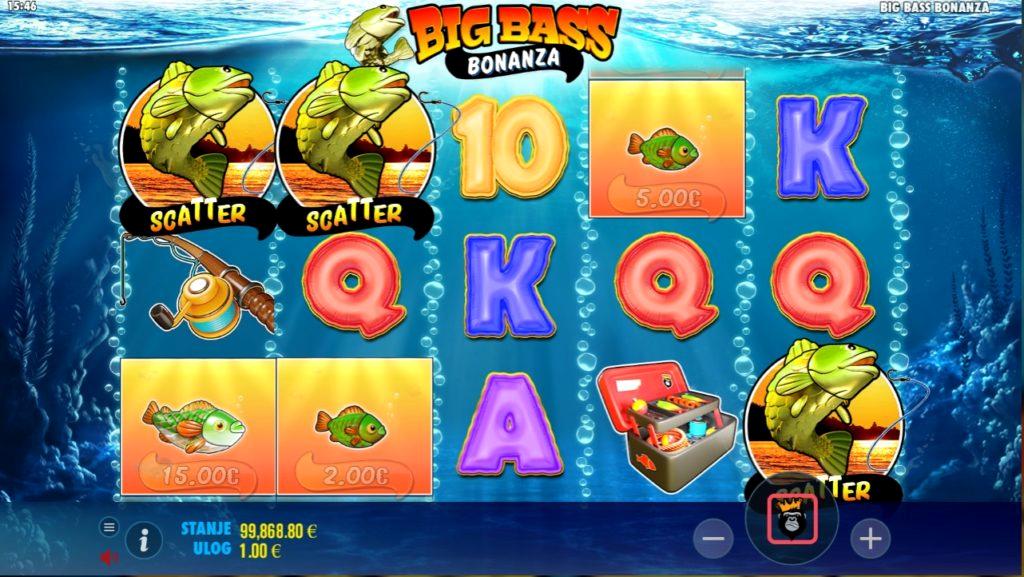
Special symbols: Scatter, Fisherman and “money fish”
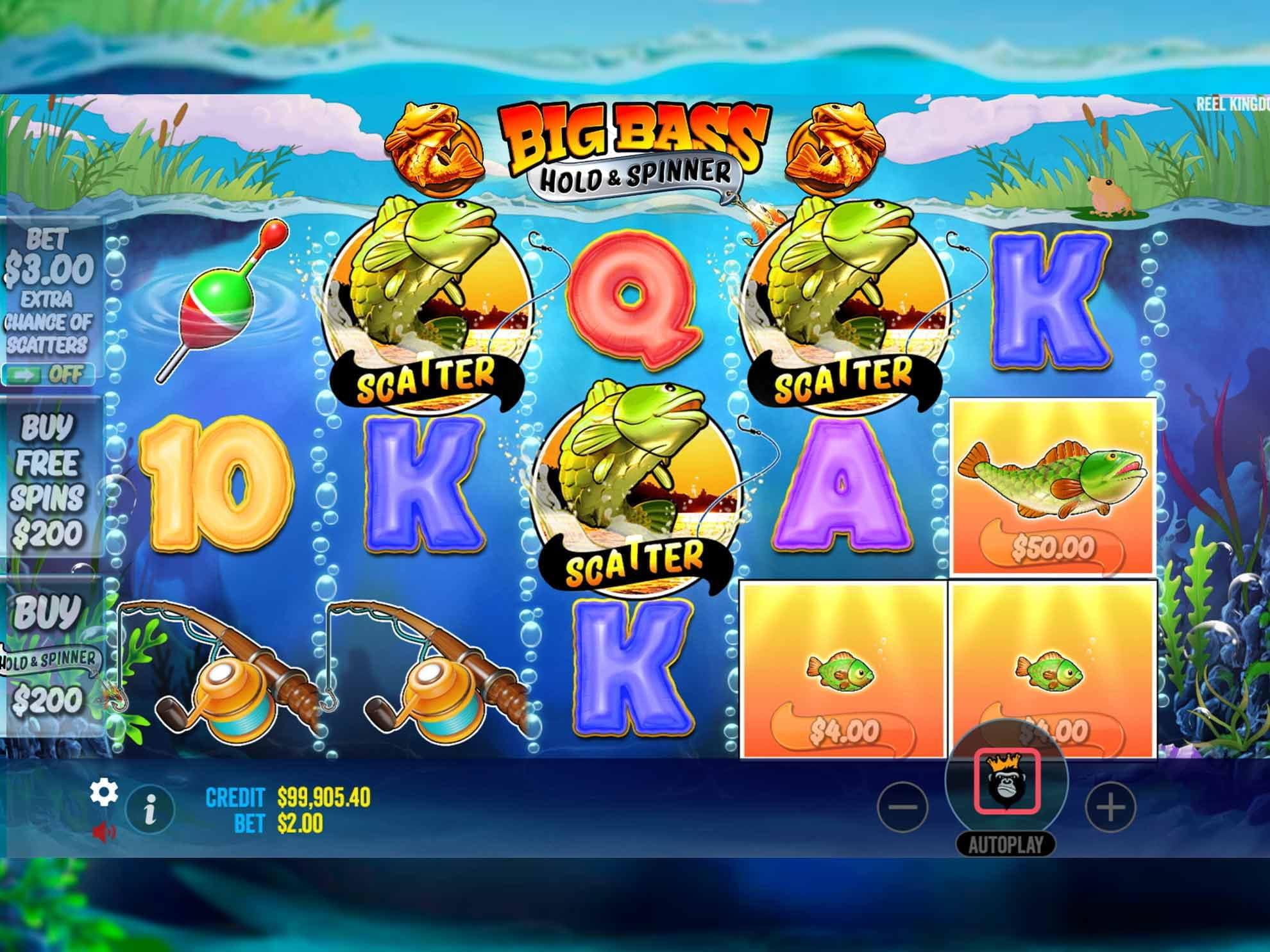
Special symbols change outcomes through effects rather than fixed coefficients. The Scatter is your entry ticket to the feature round. It needs to land in sufficient numbers to activate the mode with extended payout logic. Trigger specifics can differ by version; consult the help screen for your build.
The Wild is represented by the Fisherman and usually acts during free spins. It has two roles. First, a classic substitution for standard symbols to complete lines. Second, interaction with “cash-on-reels”: fish that show a changing amount scaled by bet size. By themselves, these fish typically don’t pay. Their displayed value is counted only when the Fisherman is on screen and the collection mechanism is active. Exact conditions and thresholds vary by version.
Do not confuse a fish’s “price tag” with a normal line payout. The tag is a potential value for collection, not a fixed paytable entry. The difference is most visible when the Fisherman “casts the net” in the feature and the game sums all visible tags.
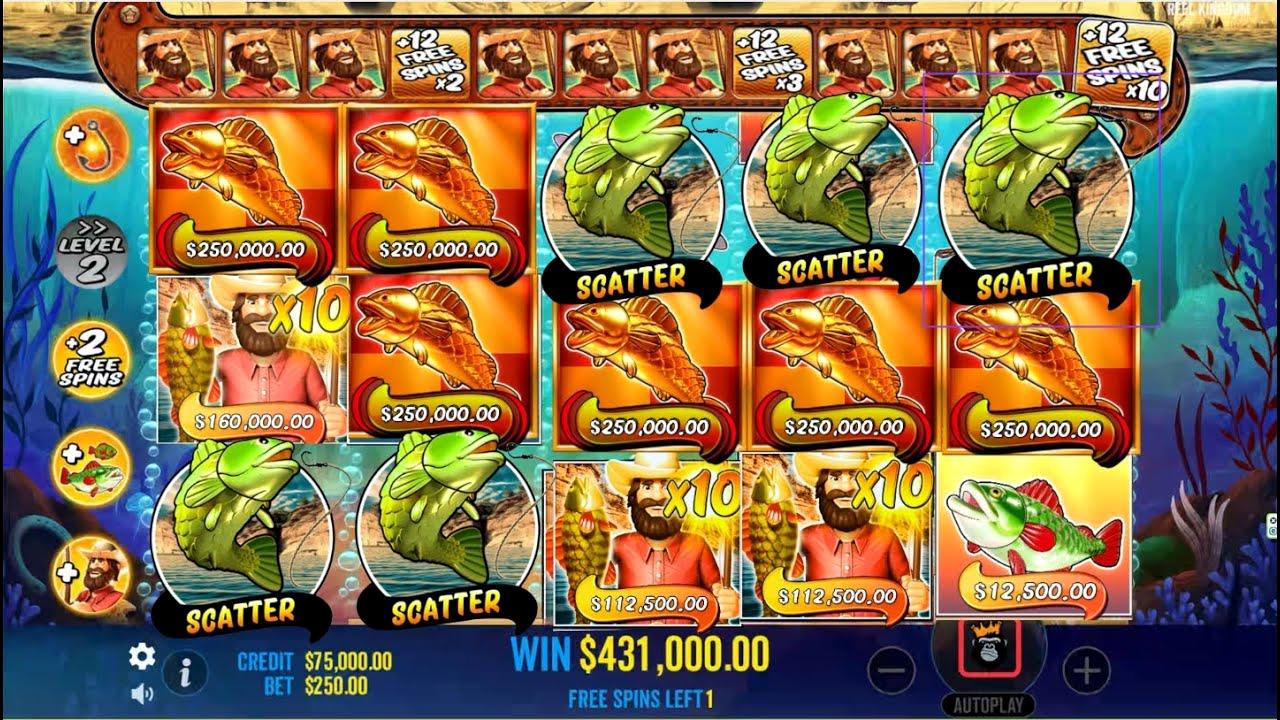
How payouts are evaluated: lines, collection and bet scaling
Base wins are line-based. The slot checks for the required number of matching symbols on adjacent reels from the left. If present, it applies a paytable coefficient and multiplies it by your current bet. Changing the bet scales the size of line wins but does not change the probability of combinations.
Money fish follow a different rule. The amount on the symbol is not taken from the paytable and scales with your bet. Those amounts are only counted when collection conditions are met, typically in the feature with the Fisherman on screen. If collection triggers, the game sums the visible values and adds them to the spin total. Some versions enhance later collections, but details vary, so check the help before playing.
It helps to watch for visual confirmation. Most builds show a distinct tally animation, an on-screen counter and a specific sound when collection occurs. Treat these as confirmation, not as predictors of the next spin.
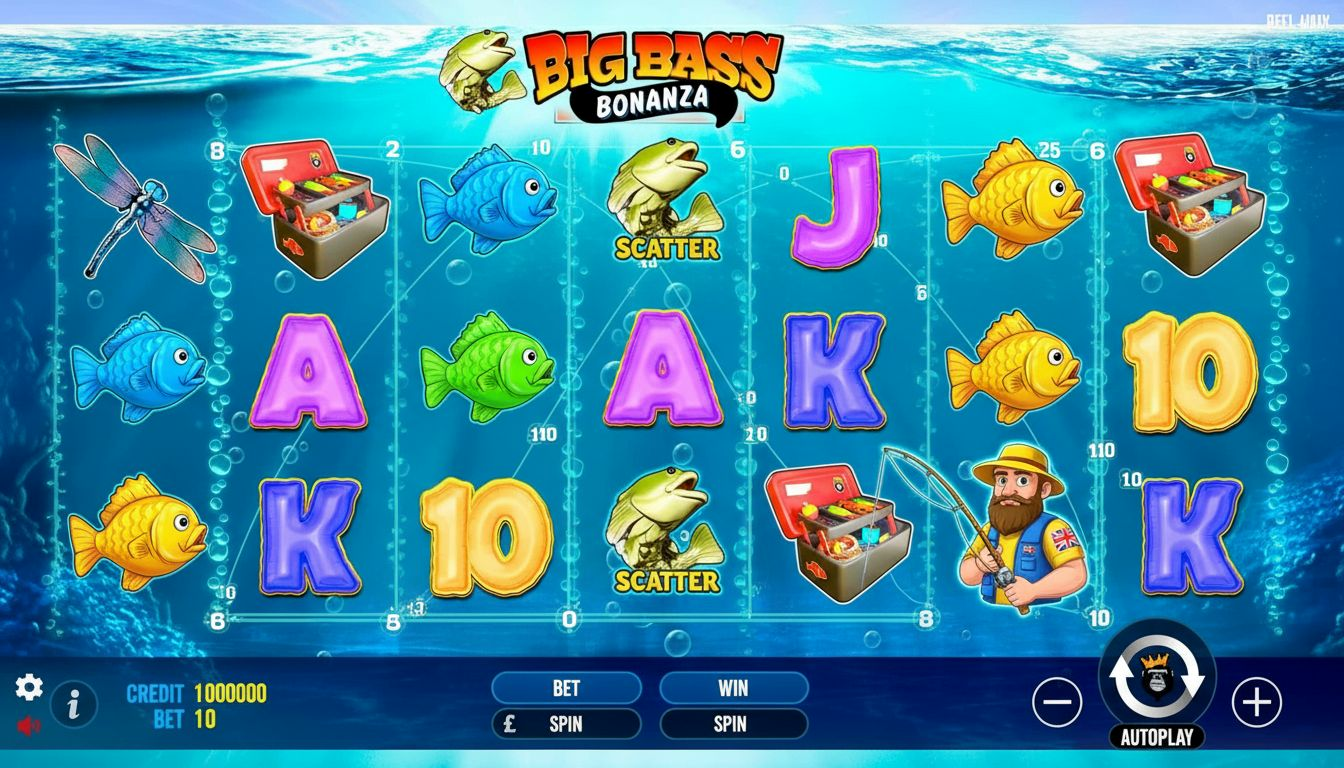
Variants and why paytables don’t always match
The name is the same, but implementations differ. Changes may be cosmetic or mechanical. Some versions add modifiers that spawn fish more often. Others adjust the payout structure by changing line counts or evaluation methods. Certain releases add Fisherman progression with visible stages that unlock on specific events.
The ranking of high symbols can also change. You may feel a familiar icon “pays less” or appears differently. In reality, a different math model redistributes frequency and payout. Read the paytable before each session and don’t transfer habits from one build to another.
Interfaces evolve too. Button layout, help visibility and line highlighting affect convenience, not probabilities. If it feels like “fish appear more often,” check the features page: the visual cues might simply be different.
Common misconceptions and how to avoid them
-
“Money fish always pay.” In most versions they are counted only with active collection, usually in the feature and with the Fisherman on screen. Exceptions and modifiers are documented in the help.
-
“Increasing the bet improves odds.” Bet size sets scale, not probabilities. Higher bets raise potential line wins and fish tags, but event frequency is unchanged. Switching bets does not “reset” anything in your favor. In some versions progression is tied to the current bet level and switches with it.
-
“A long dry spell means a big hit is due.” Spins are independent. Long gaps without collection or line hits are part of the distribution, not a signal of inevitability.
What you control: bet, duration, demo
Control is limited to interface choices, but that’s where session quality is set. Pick a bet that fits your planned session length. Keep sessions short and take breaks to manage variance.
Use demo. Test how special symbols are presented in this build, where the help lives, how lines are shown and what the Fisherman does. A few minutes in demo removes most practical questions.
Read the in-game documentation. “Paytable,” “Features” and “Help” answer how many lines are active, what Wild substitutes in this version, when collection triggers, and whether there is progression. Exact values can differ by version and operator.
Quick pre-session checklist (what to confirm in help):
-
payout scheme: number of lines and how combinations are read;
-
ranking of high symbols and their relative coefficients;
-
conditions for Fisherman appearance and when collection counts fish values;
-
whether there is progression/levels and whether it’s tied to bet level;
-
how fish values scale and whether base game and feature differ.
UX and visual cues: staying oriented
Big Bass Bonanza uses clear markers. Scatters get a distinct sound and highlight because they can lead to a feature. The Fisherman is visually emphasized, and collection shows a moving counter and a summation animation.
Animations give context. Quick line highlights show what counted and what did not. If something looks different, verify the version: small UI differences usually mean a different build, not a shift in your “luck.”
Performance and adaptability
Modern builds scale across devices. On phones in portrait, controls and help stay within a tap or two and reels remain readable. In landscape, elements spread so large values and lines stay legible.
Turbo spins and reduced animations change only pace. They save cycle time but not probabilities. Minor delays when opening help or loading assets are normal and depend on how many visual elements a scene uses.

Short history and evolution
The series rests on “Fisherman plus money fish.” Base lines create the background; special symbols add peaks through periodic collection. Over time, developers experimented with line structures, Fisherman enhancements and fish-spawn modifiers. The core remained: value emerges from special-symbol interaction and when collection is active.
For players this means one rule: don’t carry expectations between versions without checking help. Similar artwork does not guarantee identical thresholds, rankings or progression.

Short history and evolution
-
The series rests on “Fisherman plus money fish.” Base lines create the background; special symbols add peaks through periodic collection. Over time, developers experimented with line structures, Fisherman enhancements and fish-spawn modifiers. The core remained: value emerges from special-symbol interaction and when collection is active. For players this means one rule: don’t carry expectations between versions without checking help. Similar artwork does not guarantee identical thresholds, rankings or progression.
Takeaways: what matters about symbols and payouts
The low/high split sets the line foundation. The key to accumulation is not the fish themselves but the conditions for counting them. Bet size scales results without changing odds. Versions can shift emphasis, so open the paytable every time. Exact coefficients, thresholds and multipliers can differ by version and operator.
FAQ
In most versions they are counted in the feature with active collection and the Fisherman on screen. Exact behavior depends on the build.
Usually Wild substitutes for standard symbols and participates in collection. Replacing Scatters is uncommon; check your paytable.
Ranking and coefficients can differ. What feels like a “nerf” is often a different paytable. Exact values depend on version and operator.
No. It scales line payouts and fish ranges; probabilities stay the same.
Some builds tie progression to the current bet level. Switching bets moves you to another state profile. Details are in the help.
Versions distribute frequencies differently and may add spawn modifiers. UI emphasis can also create that impression. Check the features page.
In the in-game paytable and help screens. Exact values can differ by version and operator.
No. It shortens time between spins and animations; probabilities and payout logic stay the same.