Big Bass Bonanza Review — Gameplay, Symbols, Bonus Round & Features
The legendary fishing series returns with the Big Bass Bonanza 1000 slot, cranking up winning opportunities to new heights with a record-breaking 25,000x max win.
US 18+
Play responsibly
Only operators licensed by DGOJ


Base mechanics: what counts as a win and how the grid is read
In slots of this type, wins are usually formed on paylines or by “left-to-right” rules on paylines. A payline is a predefined path across the reels along which symbols are compared. The number of lines and the counting method are always defined by the rules of the specific version.
It is important to distinguish three things: the bet per spin, the cost of one line (if it is used), and the total stake per spin. In the interface this may look like a single slider, but mathematically these are different levels, and confusion here is a common source of incorrect expectations.
Bonus structure: what makes Big Bass Bonanza about “collecting”
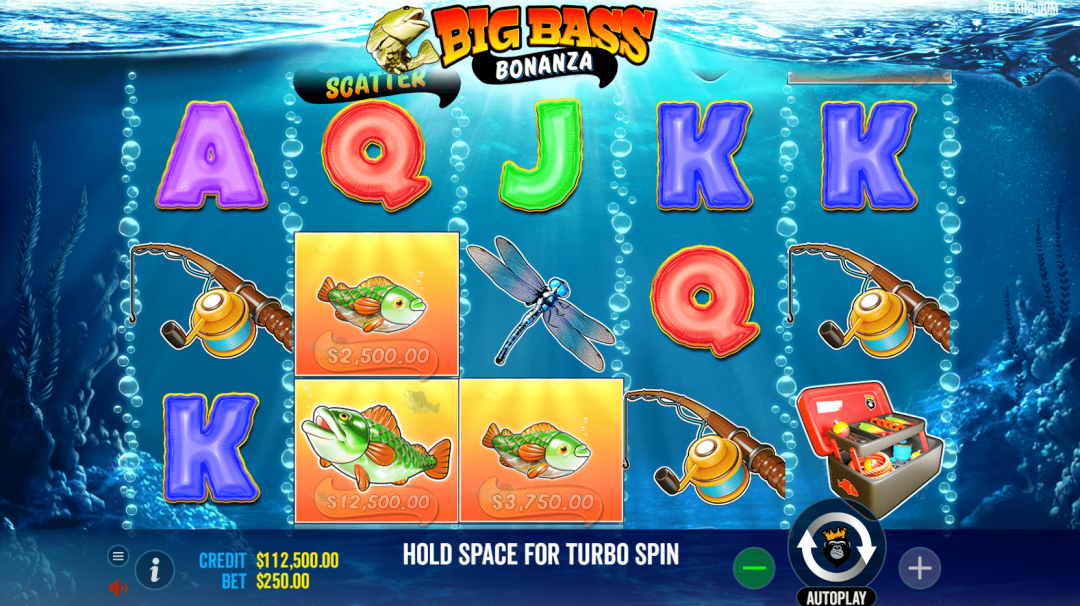
The key element of the series is a bonus round with free spins where “fish” appear (values that can be collected) and the “fisherman” appears (a collector symbol). The usual logic is: values can remain on the screen during the bonus, and if the collector lands, it “picks up” those values into the result of the bonus spin.
A crucial nuance: fish by themselves often do not pay without the collection mechanic triggering. That is why the player sees “values on the screen,” but that is not yet a result—it is a potential result if a condition is met. In practice this creates a “so close” feeling, which is exactly why it is useful to understand in advance what is an actual payout and what is only a conditional marker.
Different versions of the series may include variations: additional collector types, additional “stages” inside the bonus, or modes where the frequency of key symbols changes. But the core idea remains the same: the bonus is built around the combination of values + a collection trigger.
RTP and other parameters: how to read numbers without self-deception
RTP (return to player) is a theoretical return percentage over a very long distance. It does not describe “how often you will win today” and it does not guarantee the shape of results distribution in a short session. Likewise, “volatility” (result spread) matters for expectations about the length of drawdowns and the rarity of larger outcomes, but by itself it does not say whether a slot is “better” or “worse.”
And one more critical point: exact values may vary depending on the game version and the operator. In practice, the same game can exist in different RTP configurations, and the interface sometimes does not show everything at once.
| Parameter | What it means | Where to check | Practical meaning |
|---|---|---|---|
| RTP | Theoretical return over distance | Rules / info | A benchmark, not a session forecast |
| Volatility | Result dispersion | Game description | Expectations about “smoothness” of payouts |
| Bonus mechanics | What triggers it and how it counts | Bonus rules | Understanding what counts as a “payout” |
| Feature limits | Autospin, turbo, limits | Settings | Control of pace and spending |
Series variants and comparison with other mechanics
Big Bass Bonanza is not a single slot, but a family of versions with a similar framework. Differences most often concern how the bonus is structured: what collector symbol types appear, whether there is additional “escalation” inside free spins, and how clearly progress is shown to the player.
To understand the specifics better, it helps to compare the approach with other mechanics:
- In Cluster Pays (for example, in games with cluster payouts), wins are formed not on lines but on groups of adjacent symbols, and the dynamics are often built around cascades.
- In slots like Jammin’ Jars, the focus may be on “moving” multipliers and the repeatability of the mechanic within cascades.
- In Big Bass, the emphasis is different: “values” and the “collector” are almost a separate mini-system layered on top of regular spins.
UX and visual effects: how the interface affects understanding of the rules
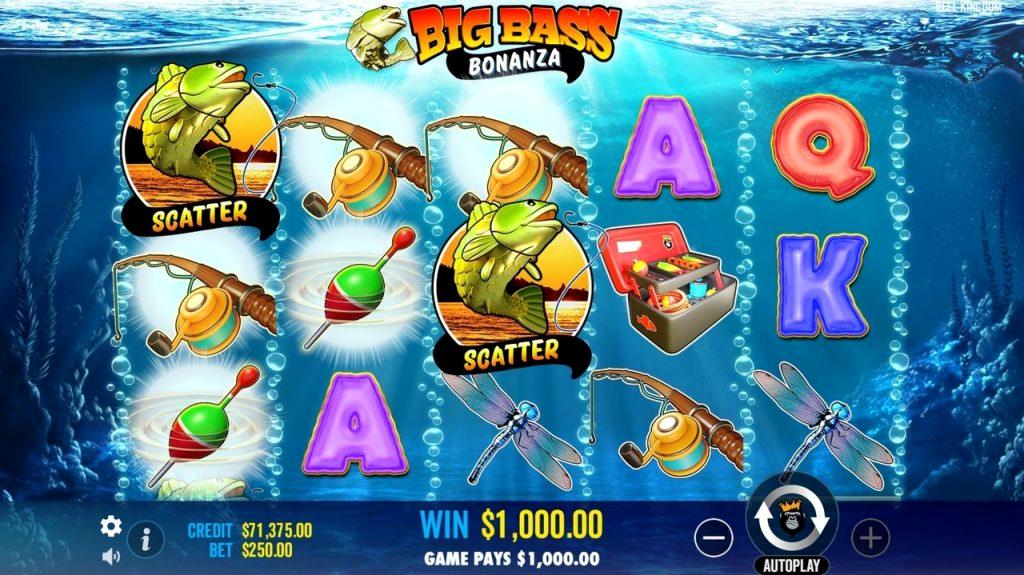
Performance and adaptability: what matters in practice
On mobile devices, three things are critical: loading speed, animation stability, and convenient stake controls. If controls are small or hidden behind multiple menu levels, the player makes more mistakes with stake size or play pace.
A separate topic is “turbo” and fast animations. They do not change the math, but they change behavior: higher pace means a higher risk of spending more than planned simply due to the speed of repeated spins.
Pros / Cons
Player mistakes and misconceptions: what is most often misunderstood
The most common mistakes look like this:
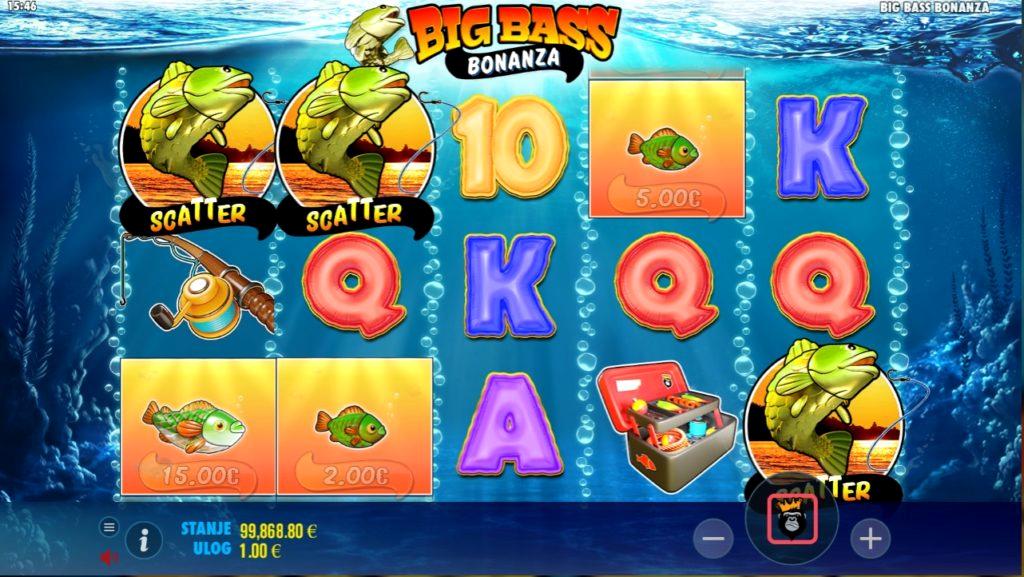
- The player assumes that “fish on the screen” already equals a payout, while without collection it may be only a potential value.
- The player treats RTP as a promise of a result “within a reasonable time,” although it is a parameter for a very long distance.
- The player searches for the “right moment,” confusing the randomness of individual spins with a pattern.
What is actually under the player’s control: pace, limits, demo
In slots, control is almost never about “influencing the outcome,” but about managing the process. A useful practice is to choose session duration in advance, choose pace (normal/turbo), and also try the game in demo mode to understand the bonus mechanics and the betting interface.
In demo mode, it is important to test not “how often it pays,” but understanding of the rules: what triggers the bonus, how collected values are counted, and which elements are easy to confuse on a mobile screen.

Conclusions
-
Big Bass Bonanza suits those who want a transparent base game and a bonus where the result is determined not only by “getting free spins,” but also by how the collection mechanic worked. The key is to separate visual markers from actual payouts and to read parameters as benchmarks rather than forecasts.
FAQ
RTP is a theoretical return over distance; short sessions can deviate significantly.
In many versions, a value becomes a payout only when the collection mechanic triggers.
The math does not change, but spending speed and the risk of exceeding a limit change.
Usually by bonus details: collector symbol types and rules inside free spins.
Yes, to understand the betting interface and bonus conditions without financial pressure.
In the info/rules section inside the game; exact values may vary depending on the game version and the operator.